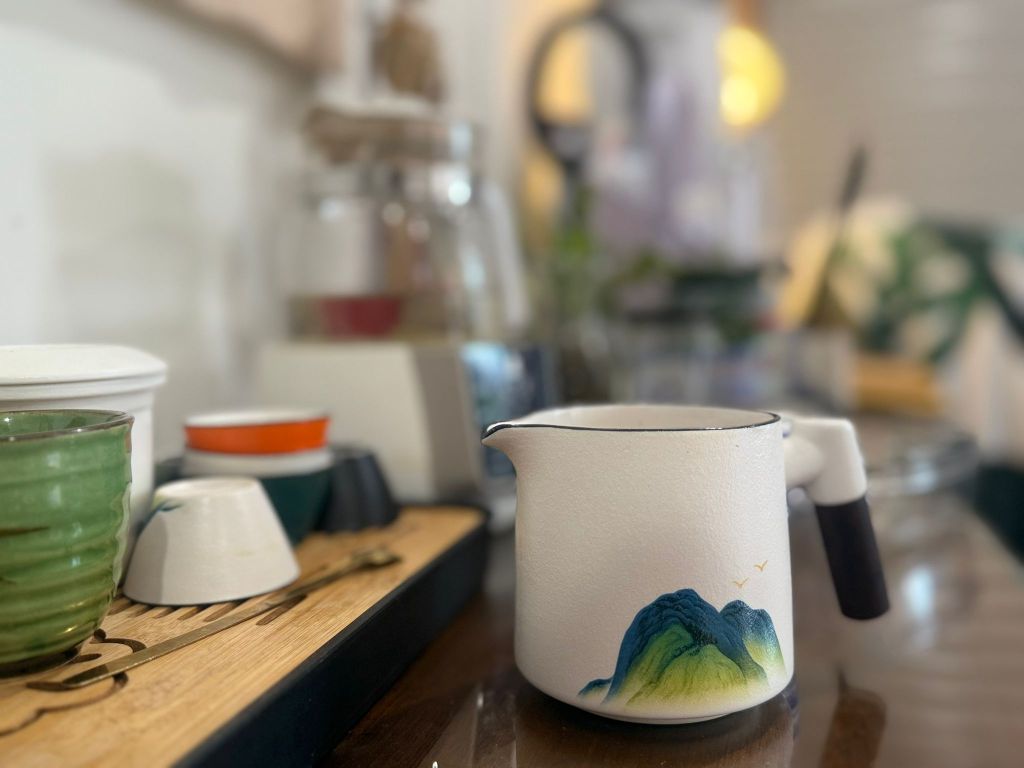
In ancient Chinese philosophy, there was a belief that invisible forces, such as energy, spirit, and the state of “emptiness”(Tao), determine the visible aspects of life. Practices like ancient Chinese calligraphy, talismanic symbols, tea ceremony, chanting, and engagement with early written forms are not just about aesthetic outcomes, but were used as a daily practice to transform one’s inner energy and reconnect with ancient wisdom embedded in these symbolic forms. The practices are seen as portals/ energetic carriers or totems that can open up “space-time connection,” allowing people to access the wisdom stored in our collective consciousness passed down by their ancestors. If these artforms are practiced consciously, they could help individuals to develop inner wisdom, clarity, focus, peace and remove attachments, aversions and unhealthy associations and dependency with the external world, to truly foster deep self-confidence, self-acceptance, and freedom from external seeking.
古代中国哲学的思想有种意识,认为无形的能量、精神与“空性”决定着有形的现实,并指出书法、符号、茶道、吟诵等传统实践并非追求形式之美,而是作为能量与智慧的载体,帮助人们与古老文明相连,在过程中实现内在能量的转化,逐步接近空性。通过这些载体,人们得以向内探索,减少对外在物质与评价的依赖,理解自己真正的需求,从而建立真正的自信与内在安定,不再向外追求,而是从内心深处寻找答案。